Showing posts with label over 50. Show all posts

Thursday, September 21, 2017

Dreaming the Same Dream

Squashed in with 12 other passengers, with one whole seat dedicated to my pile of luggage, I am travelling by mini-van from Nairobi on a four hour drive upcountry through lush green tropical vegetation and rusty-red soil fields, gazing out the window at bustling roadside stalls, soaking up the sun and breeze, munching fistfuls of potato crisps and crunchy peanuts, next to pretty Evelyn, a teenager clutching her backpack. Then after two hours of companionable silence, she whispers: “I have only one parent now”. She is returning to her village for her father’s funeral. A knot of sorrow tightens in my chest: “I am sorry,” I say softly with total inadequacy.  

Happy Arrival

Millicent, beaming and beautiful, and her strong and kind husband, Pastor Garama welcome me with an afternoon meal in the Faraja community centre, a sturdy building of painted brickwork that Millicent funded herself in 2003. In these past 14 years she has been feeding and caring for orphans and vulnerable children and supporting girls and women with vital health education.

After Millicent, a dedicated nurse and midwife and later hospital administrator, was sponsored to study and work in Scotland she felt so blessed she wanted to give back to her community. So she poured all her savings into the building and called the centre ‘Faraja', which means ‘comfort’ in Swahili, an apt name for this soothing refuge that gives comfort and hope, joy and love to so many.

The colourful room with animal murals where the boisterous children play and laugh and dance and sing is a vast uncluttered space. However the empty room has no basic amenities - no plumbing, no electricity, no kitchen to cook the children food! The ladies make dishes of rice and beans at home and transport the food to the centre.


The corner of the spacious community centre with the potential for a kitchen
I meet Fridah, who is employed in the sewing room making impressive African fabric bags, and Faith and Robert, who Millicent is mentoring and training as facilitators to take health and human rights education into the remote villages.


Millicent and Garama with a selection of the African fabric bags that Freida is making 


Millicent and Garama outside the centre where the community could create a vegetable garden
I am happy to be here in this blessed place that I’ve been visualising day and night – while drifting off to sleep, waking up, under the shower, driving along country lanes and on the slow train to London - since my last visit to Meru exactly one year ago.

Settling into the Guesthouse

I’m staying in a ramshackle guesthouse built of faded grey tin sheets and timber by a British doctor in the 1920s in the tranquil compound attached to the busy hospital. 

The house has dormitory-style bedrooms and three other guests have left to hike Mount Kenya. I have the spacious house all to myself. My small room has a single bed, cheerful blue floral duvet and rock hard pillow. I find an old soft pillow stashed in a cupboard and save my neck from cramps!

Mastering the squat toilet is an interesting exercise so I opt for the flushing toilet. My shower is scorching hot. The other shower is freezing cold…nothing in between! I discover how to adjust the temperature after a few days, just in time to wash my hair!

The guesthouse where I'm staying 


My single bed in my little room
New Friends
Millicent introduces me to her American friends, Beth and Larry and Martha and Jim, doctors and community workers who live in the hospital houses nearby. They are sharing their expertise with the medical staff, supporting local projects and soaking up the fascinating culture. 

I take my breakfast and dinner, lovingly prepared by smiling Douglas and Anne, in the comfortable guesthouse where I stayed last visit, just a short walk across the garden. Jane, the gardener, has the entrepreneurial finesse to multi-skill and put down her rake and sell me a bag of scones! 

Douglas and Anne at the main guesthouse where I have meals
Cooks, Douglas and Anne in the kitchen
I dine with Josh, an enthusiastic young American doctor volunteering at the hospital, Mark, a Kenyan surgeon who can work up to 16 hours straight to finish a complicated operation, and Kerre, a visiting dentist, doing his monthly clinic at the hospital, when patients from all over the district come for urgent dental treatment.

Our Shared Vision

Millicent and I sit together and share our vision for the Faraja community centre. Mystically, I have been dreaming of installing a much-needed kitchen and so has she!

In some inexplicable cosmic intersection of dreams, we have been dreaming the same dream - me in secret journals in my secluded home in rural England, and Millicent in prayers in her church in rural Kenya!

As we sip coffee, we dream together of cooking classes for young and old, making nutritious food for all, planting a community vegetable garden and keeping hens to provide fresh eggs.

We imagine expanding the sewing project into making reusable shopping bags and mending donated clothes for ladies to sell in the markets.

We dream up the possibility of bringing volunteers to the centre from the UK, Europe, US, Australia and other countries to share our cultures in a multitude of enriching ways in a grand ‘voluntourism’ venture, combining community work with exhilarating safaris!    

We laugh and cry and smile until our cheeks ache! Now the dream is spoken out loud we both know we have made a commitment and a promise to the children, the community, in fact, the whole of Kenya and those people who want an exciting opportunity to Make A Difference.

Grey Clouds of Doubt

Later in the afternoon I am alone and overwhelmed with anxiety. Suddenly imaginary cynical voices are taunting me: ‘Just how are you going to make it all happen?’ I’m tormented by details, doubts and questions and oppressed by grey clouds of pessimism.  

My mind is spinning when I join Mark and Kerre for dinner. We share our philosophies about the crushing unfairness of poverty. We lighten the mood with entertaining stories, laugh and joke and connect across cultures through our shared concern for suffering humanity.

When I return to my little room, my confidence has returned because our warm conversation has reminded me why I am here and why I am doing this: for the love of these people.

The heavy rain pounds the tin roof all night but I feel safe and snug and wake up with the realisation that this ambitious project is like having a baby.

Surgeon Mark and Dentist Kerre
Giving Birth 

After gestation, a mother gives birth and the overwhelmed new parents do not have a clue how they are going to raise this baby over the coming years. They don’t know exactly how they will solve the countless problems and challenges ahead. 
The nervous yet determined parents only know they must take care of their precious child day by day.
And so they step bravely into the unknown journey!

Years ago, when I gave birth to my beautiful daughter, I also launched my newspaper column, Family Matters, writing that ‘giving birth is the ultimate act of faith’.

The time to ‘give birth’ has come again at a more mature stage of life. My Kenyan soul sister, Millicent and I are committed to raising Baby Faraja into an inspirational, dynamic force for good. And together, without knowing exactly how, we are embracing an ultimate act of faith.


Friday, September 8, 2017

Giving to Future Generations

At the retirement village some of the elderly residents have twinkling eyes, hearty laughter and full calendars! Like the irrepressible Joy and Jeff, in their 90s, who ride their bicycles everywhere, volunteer in their church and see the good in everyone!  

Other residents are full of bitterness and petty grievances. One old man is convinced his gardening spade has been stolen, an indignant old lady is furious about the bossy bitch who has taken over the social committee.

In loud conversations on driveways, they compare and compete about their painful ailments, the heart scares, the bad knees, the hip ops, the emergency hospital visits, without listening or caring about the other’s suffering.


Another faction vilifies, in vicious huddles, those horrible dogs that leave messes on their manicured lawns and vehemently condemns irresponsible dog-owners. They should be thrown in jail!

The wrinkled, hunched old wives grip the flabby arms of their senile husbands when a younger woman walks by and smiles ‘Hello’; jealously guarding the old relic and oozing envy and grief for her lost youth, buried with photo memories deep in the drawer with the sparkly ear rings she once wore, dazzling the dance floor with haughty elegance!


I am fearful of ending up like this; shrinking smaller and smaller and withering, bitter and twisted, lonely and isolated, in a segregated old people’s ghetto, discarded by mainstream community, waiting…waiting for something? What is it? Are these cranky old folks aching for Grace; for Love to swoop in, like a huge soft white dove, and cradle them, a visit from the ungrateful grown-up children who are busy with their interesting lives.

Perhaps they are waiting for genuine friendship that pierces their dense armour of complaints and touches the heart with lightness, joy, humour and gratitude in still being alive! Or perhaps they are waiting to be recognised as useful, the realisation by youngsters that all their years of experience must be good for something!  


Erik Erikson was a German-born American developmental psychologist and psychoanalyst (1902 – 1994) who extended the developmental theories of Freud to include the entire lifespan.

Erikson identified eight stages of development, not just in childhood, but also right throughout life into old age and death. He claimed each stage held an inherent struggle and desired outcome.

Erikson's Theory of Human Development throughout our Life Span 

He claimed from birth to age one, the baby has to resolve a crisis between Trust and Mistrust of parents or caregivers with the desired outcome of Hope; from one to two, the toddler grapples with Autonomy versus Shame and Doubt with the desired outcome of Will; from age three to five, the young child faces a crisis of Initiative over Guilt within the family with the desired outcome of Purpose. From age six to 11, the child is challenged with Industriousness over Inferiority at school with a desired outcome of Competence.

Stage Five, Adolescence, brings conflict between Identity and Role Confusion within peer groups with the desired outcome of Fidelity, the ability to be true    
to an integrated sense of self.

In Young Adulthood, the challenge is finding Intimacy over Isolation with a spouse and amongst friends with the desired outcome of Love.

Which brings us to Stage Seven, Middle Adulthood where we are challenged to discover “generativity”, a term coined by Erikson, rather than self-absorption within our family, community and work. The desired outcome is Care.

Generativity means the ability to look beyond yourself and to express concern for the future of the world and younger generations. In contrast, the self-absorbed person is preoccupied with personal wellbeing and material gain.


Going MAD in a good way! 

When I hit 50 I was also hit with an overpowering desire to go MAD; that is, to Make a Difference to the world. I wanted to contribute to solving problems and reducing suffering on a global level. Having lived more than half of my life, the balance was tipped to the approach of the end and I started thinking about legacy, concerned about what I would leave behind after I’m gone.

So that is when my husband and I migrated from far-flung Australia to the UK to be close to the centre of the world stage, where we felt better placed to make a positive difference to global issues.

My progress in making a difference on a grand scale has been slow. I’ve done much soul searching about my talents and skills and researched causes and charities I could support.

On my 57th birthday we had a night out in London and saw the brilliant stage show War Horse, with the most talented, creative performers operating intricate life-like puppets, singing, dancing and acting with utter perfection to tell a glorious, triumphant story.

The next day I took to my bed and my journal and tried to figure out what I was good at! I realised that I am not a perfectionist who could spend hours every day for years mastering an instrument or difficult skill.

I searched my formative years and remembered how I discovered the joy of writing stories at age 11 and the thrill of being published in the school newsletter! 

Then at 17, I discovered the empowerment of becoming a vocal campaigner! And I recalled how I was a passionate activist in my 20s; how in my 30s I was elected a local government councillor to work for my community.

In my late 40s I experienced a crisis and wallowed in a bottomless lake of therapy and self-analysis and had to wade my way back to focusing on others. And so we left the endless summer of coastal Queensland and came to bustling London for a new lease on life. And these years of my fifties have been wonderful, full of city pleasures, travel and adventures!

So at 57, I was reminded of my true Purpose (beyond fun times) and decided to devote the rest of my life to using my writing skills to campaign for good causes; human rights, peace, animal and environmental protection; all the good stuff that will allow our damaged world to heal, survive and flourish in the future.

Now I am ready. I am passionately committed to future generations of girls across Africa discovering their human rights and becoming empowered, free from abuse, suffering and poverty. This is my mission for my sixties, for the next decade of my life.

Shifting Focus 

If a person in their 50s, 60s and 70s shifts focus to making a difference for others, then he or she will face old age with a sense of dignity, satisfaction and personal fulfilment.

Middle-aged and older people thrive when they use their lifetime of experience to mentor teenagers and young adults or lavish patient love on grandchildren or volunteer in community, environmental or humanitarian projects.

Those mature-aged people who choose to contribute rather than expecting to be coddled by the young are ironically the ones who thrive with a sense of purpose, joy and gratitude, despite their aches and pains.

The elderly do not have to end up bitter and twisted, nursing grudges and resentment, burdened by sense of futility and despair, disappointment and failure.

Sir David is the Ultimate Role Model 

If we need role models, consider the inspirational Sir David Attenborough, who has devoted his life to educating us about the wonders of animals and the natural world in his outstanding documentaries.
He continues in his creative film making at the sprightly age of 91 and may he continue until he’s 100!


 In Old Age, the final stage of life, Stage Eight according to Erikson, we face a struggle between Integrity and Despair. And the desired outcome is Wisdom.

I hope that Wisdom will lead you in your mature years to Integrity; the choice to make a difference for future generations because “generativity” is the hope of the future.


Wednesday, August 30, 2017

Finding Purpose in Later Life

I believe that older people should go MAD! That is, Make A Difference to the world! This desire to Make A Difference usually takes hold when we hit 50. We yearn to make a positive contribution to our local community, our country or global issues. We are bursting with a lifetime of accumulated knowledge and wisdom, empathy and caring and skills and talents. And we want to enrich younger generations with all we have to offer.

When our kids grow up and become independent adults, it’s possible to embrace a whole new lease on life. We have the freedom to reinvent ourselves!  

However one of the problems older people can face is becoming too ‘self-centred’ and fixated on their ailments and grievances. (I understand that many people are dealing with chronic pain and serious illnesses that require focus on self-care.)

For healthy women and men over 50, the solution is to become ‘other-centred’. We all need to ask ourselves: ‘How can I improve the world by alleviating suffering and increasing joy?’

Ironically resisting self-absorption and shifting to an outward focus benefits our own health and wellbeing. There are rich rewards in being altruistic. Devotion to others brings a sense of purpose, deep fulfilment and empowerment. Or if I can indulge in a snappy alliteration: purpose, passion and power!

The opposite state of mind as we age is a miserable option: a bleak sense of futility, emptiness and helplessness, while wallowing in self-pity and resentment, blaming the new fast-paced, high-tech workplace for throwing us on the scrap heap, stamped ‘obsolete’.

All human beings have basic emotional needs to be loved, needed, wanted, respected, appreciated and valued. These needs don’t stop at 50! Mature-aged people must play a valuable role in the community as wise elders, earning respect and appreciation from the young.

Sadly in our youth-worshiping culture, us older people are often not respected for our decades of life experience, deep well of knowledge and the unique skills and talents we’ve mastered.

Rather than complaining and blaming young people for their bad attitude, it’s up to us to be pro-active and create a valuable role for ourselves within our families as helpful grandparents, local neighbourhoods, in national organisations or venture to other countries to support those in dire need of our expertise.  

My Story

We were happy living on the Sunshine Coast in Australia. With a carefree beach lifestyle, an ideal place for raising our kids, my husband and I had successful, thriving careers. I enjoyed a high profile as a newspaper journalist and popular columnist, local government councillor and in my 40s studied psychology and became a counsellor of a different kind!


And then eight years ago in 2009 we were ready for a major life change and fresh challenges. I had wanted to live in the UK since my 20s.
Growing up in Australia I felt displaced and isolated from the rest of the world, with my appetite for travelling and exploring and global issues.

So we moved to London, which was so thrilling! I devoured a cultural feast of musical shows and concerts, weekend jaunts exploring the genteel English countryside, historic castles and quaint villages and was blessed with a lifelong dream of being a travel writer, with enviable trips to picturesque destinations in Europe. 

Moving to the UK was a homecoming for me, returning from the far-flung colonies where my English, Irish and Scottish ancestors, some convicts, transported and incarcerated for petty crimes, and some courageous sole migrants who left their distraught families for the unknown, untamed continent 10,000 miles across the oceans.

But we returned to the homeland to embrace bustling, multicultural West London and then the tranquillity of rural Kent, where we now live with our cocker spaniels and hens, revelling in the changing seasons.  

I don’t miss being lethargic and pouring sweat in the sweltering tropics. Cosy in my coat and boots, I delight in crisp walks on crunchy leaves in the woodlands and cheerful daffodils and shimmering carpet of blue bells come spring!


You would think this pleasant, comfortable life would be enough for me. But I started to get this gnawing feeling, this MAD desire. Witnessing all the problems of the world, the suffering, poverty, deprivation, trauma and abuse, the horror of war, my heart ached with pain. The extent of tragedy on our planet is overwhelming.     

I knew I couldn’t solve ALL the problems of the world so I decided to pick one issue I feel strongly about – stopping little girls from suffering the horrendous abuse of female genital cutting. As many as 8000 girls every day, that’s three million girls a year globally, are subjected to this trauma. If girls survive the shock, blood loss and infection, they are condemned to lifelong pain and health problems. An estimated 200 million women around the world live with the consequences of FGC.


Researching and writing on the subject over three years, I searched relentlessly for the best strategies to prevent the harmful practice. That’s when I discovered the dynamic charity Tostan, led by trailblazing visionary, Molly Melching. Tostan has been highly successful in West Africa through grassroots education in villages, transforming millions of lives over the past 25 years.  


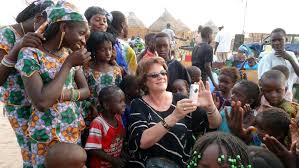
So in 2016 I trained with Tostan in Senegal, which inspired me with the ambitious dream of taking the Community Empowerment Programme to remote villages in East Africa; a dream that was intensified when I travelled on safari in Kenya, Tanzania, Rwanda and Uganda and fell in love with the wild country and beautiful people.

Community Work in Kenya

Soon I will return to work in the Meru community in the lush region surrounding magnificent Mount Kenya, with my dear friend Millicent Garama, an experienced health worker, whom I met at the Tostan training.


I will help Millicent care for the adorable kids, including orphans living with HIV, and get to know the lovely ladies in the sewing project and help with growing veggies and join in cultural activities with African music and dancing and traditional food! I might even introduce the locals to my vegetarian specialities of lentil burgers and hummus!

I will share an abundance of inspiring, eye-opening, heart-warming experiences with you, my adventurous, curious readers, connecting you with another fascinating culture, transporting you into the exhilarating possibility of Making A Difference. Join me.